Lido Key's Real Divide Isn't Beachfront vs. Bay Side. It's the Year 2000.
Two three-bedroom condos, both roughly the same square footage, both listed within a few hundred thousand dollars of each other, sit within four blocks of one another on Benjamin Franklin Drive. One occupies an eleven-story tower with a private elevator to each residence and a restaurant reserved for owners. The other has been standing since the early 1970s, with a pool deck that's been resurfaced twice and a lobby that still has the bones of its original design. On paper, a buyer comparing these two could reasonably treat them as interchangeable versions of the same purchase.
They aren't. The moment a buyer requests the older building's most recent Structural Integrity Reserve Study and milestone inspection report, the two listings stop looking like variations on a theme and start looking like two different financial instruments that happen to share a zip code. On Lido Key, the line that actually separates one condo purchase from another doesn't run between Gulf-front and bay-side, or between the public beach and St. Armands Circle. It runs through the calendar, roughly at the year 2000, and on one side of that line sits a state safety law whose most consequential deadlines have landed in the past year.
Florida's condo inspection framework exists because of Champlain Towers South, the Surfside building that partially collapsed in June 2021. The legislature responded with Senate Bill 4-D and, later, House Bill 913, creating two overlapping requirements for condo and cooperative buildings three habitable stories or taller: a milestone structural inspection at 30 years statewide, or 25 years for buildings within three miles of the coast, and a Structural Integrity Reserve Study covering eight critical components including the roof, load-bearing structure, plumbing, electrical, and waterproofing.
The practical timeline matters more than the theory. Existing owner-controlled associations were required to complete their initial SIRS by December 31, 2025, a deadline extended by a year under HB 913. That date has already passed. As of January 1, 2026, associations can no longer waive reserve funding for those eight structural components, and full funding must be underway. Any Lido Key association that was on the hook for a SIRS should have one on file right now, and a buyer touring a pre-2000 building has every right to ask for it before writing an offer, not after.
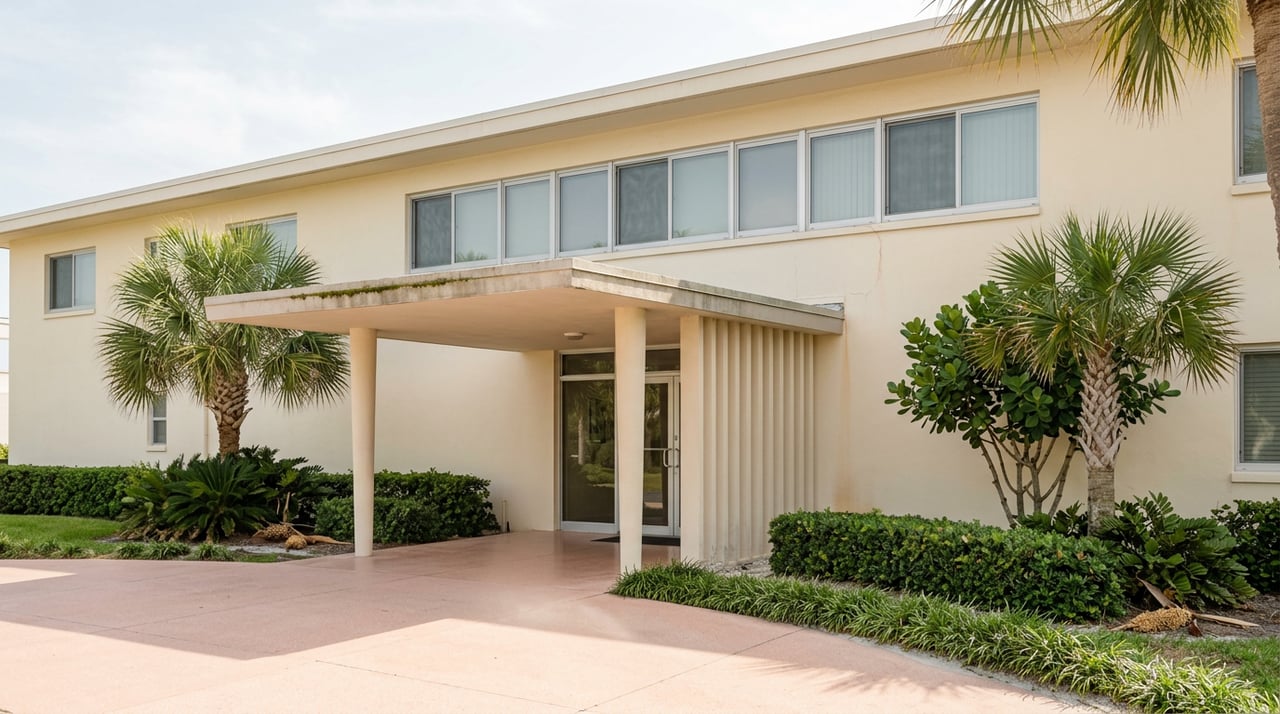
A building's age also determines how much of this a buyer is walking into blind. St. Armands Towers, at 1 Benjamin Franklin Drive, was built in 1968, meaning it passed the 30-year milestone threshold decades ago and is now well past the 25-year coastal trigger as well. Lido Beach Club dates to 1974. Lido Ambassador opened in 1978. None of that makes these buildings bad purchases. Many older associations have already completed their inspections and addressed what surfaced. But it does mean the paperwork trail is longer, and the questions a buyer needs answered are different in kind, not just degree, from what a newer building requires.
| Established cohort (built before 2000) | New luxury cohort (built 2000 or later) | |
|---|---|---|
| Representative buildings | St. Armands Towers (1968), Lido Beach Club (1974), Lido Ambassador (1978) | Beach Residences (Ritz-Carlton managed), Rosewood Residences Lido Key (delivering 2026) |
| Milestone inspection status | Already past the 25-year coastal trigger, several past 30 years entirely | Not yet due; decades before the first inspection cycle begins |
| SIRS reserve funding | Governed by non-waivable rules in effect since January 1, 2026 | Not yet applicable |
| What the price reflects | Beach proximity, established locations, often a lower per-square-foot entry point | New construction standards, full concierge service, a materially higher entry price |
The dividing line isn't about which cohort is the smarter buy. It's that these are two different due-diligence conversations wearing similar square footage.
The milestone inspection process runs in two phases. Phase 1 is a visual structural review, and if it turns up nothing concerning, the building is done until the next ten-year cycle. If Phase 1 finds substantial deterioration, Phase 2 triggers destructive and non-destructive testing to determine the extent of it, and required repairs must begin within 365 days of the local enforcement agency receiving that report.
Phase 1 inspections run roughly $8,000 to $25,000 for smaller buildings and $50,000 to $150,000 or more for large high-rises. Phase 2 testing, when triggered, adds another $40,000 to $250,000 or more. Those figures cover the inspection itself, not any repairs the inspection identifies, which get funded through reserves, a special assessment, or a loan against future dues.
There's a financing wrinkle that matters even to buyers who never plan to sell. Buildings without a completed milestone inspection risk landing on Fannie Mae's unavailable condo project list, which blocks conventional mortgage financing on units inside them. Roughly 5,000 Florida condo buildings are already on that list statewide. A cash buyer can look past this. A buyer who needs a conventional loan cannot, and it's worth confirming a building's inspection status before falling in love with a unit inside it.
Part of why this divide is worth mapping right now is that Lido Key's newer cohort is about to get bigger. Rosewood Residences Lido Key, the Ronto Group's 65-unit tower at 1000 Benjamin Franklin Drive, topped out its eleventh floor in November 2024 and was originally targeted for completion in early 2026. As of this writing, the developer's own materials point to a fall 2026 delivery instead, a reminder that even ultra-luxury new construction on a fixed site can slip by a season or two. As of December 2024, roughly 40 percent of the building's 65 residences had sold, at prices Ronto Group president Anthony Solomon described as among the top price points in Sarasota, with units ranging from roughly $6.5 million to $15 million.
A few blocks north, the site of the former Holiday Inn, built in 1970, has been redeveloped into Cirque St. Armands, a circus-themed hotel and restaurant concept that was slated to debut in spring 2025. It's a small detail, but it's the kind of thing that shows the island isn't static. New product is arriving on top of a fifty-plus-year-old condo stock, and the two are going to keep sitting side by side on the same MLS search results for years to come.
For anything built before 2000, the documents worth requesting before an offer goes in look like this:
None of this is a reason to avoid a pre-2000 building. Many have already worked through their inspection cycle and come out the other side with clean reserves and a manageable dues structure. It's simply the homework that a 1974 building requires and a 2026 building doesn't, at least not yet.
Does buying new construction mean avoiding this entirely? Only for now. Every condo building eventually reaches the 25 or 30-year threshold. A 2026 delivery buys decades before the first inspection cycle, not permanent exemption from one.
How does this compare to a place like Bird Key? It doesn't, because the comparison doesn't apply. Bird Key's housing stock is entirely single-family homes, so the milestone inspection and SIRS framework that governs condo associations has no equivalent there. The two islands carry genuinely different risk profiles for that reason alone.
Does bay-side versus Gulf-side change the calculus? Less than construction year does. Lido's bay side tends toward lower-density buildings, but a bay-side building from 1976 faces the same inspection math as a Gulf-front one from the same era.
The median price on a Lido Key condo search tells a buyer what the island costs on a given day. It doesn't tell them which decade of state regulation they're buying into, or what that decade will ask of them five years from now. That's a building-by-building question, and it's worth answering before an offer goes in rather than after the estoppel certificate arrives.
If you're comparing Lido Key buildings and want a second set of eyes on a reserve study or milestone report before you commit, Thompson Group Sarasota can walk through the specific building, not just the listing, with you. Schedule a private consultation and we'll help you read the paperwork the way we'd read it for our own family.

Blog
Blog
Our community searches will keep you up to date with the latest properties in the areas you are interested in. We will help find you your little piece of paradise from golf to gulf and everything in between. Contact us today!