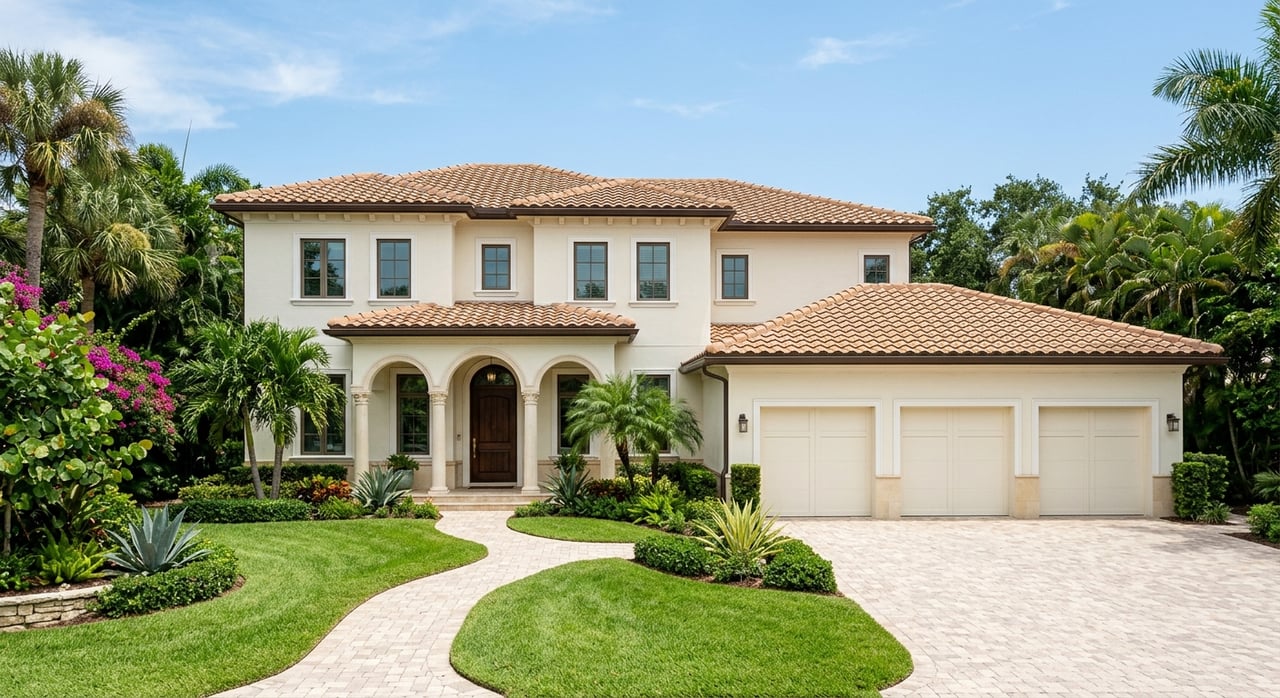
Relocating To Lakewood Ranch From The Northeast
Thinking about leaving the Northeast for Florida, but not sure if Lakewood Ranch is the right fit? You are not alone. Many buyers want warmer weather, a different tax picture, and a more streamlined lifestyle, but they also want a community that feels established, practical, and livable year-round. This guide walks you through what to know before relocating to Lakewood Ranch, from taxes and housing options to amenities and moving logistics. Let’s dive in.
Lakewood Ranch offers something many relocation buyers are looking for: a large, master-planned community with everyday convenience and access to the Gulf Coast lifestyle. According to the community, it spans more than 35,000 acres, includes 36 villages, and is home to more than 80,000 residents. It also features 150-plus miles of trails and 13 parks.
For many buyers coming from the Northeast, one of the biggest draws is balance. Lakewood Ranch is inland, east of I-75, yet still about 20 minutes northeast of downtown Sarasota and Siesta Key. Beaches are roughly 15 to 18 miles away, which means you can enjoy coastal access without living directly on the barrier islands.
Another reason it stands out is that it is designed for full-time living, not just seasonal ownership. Lakewood Ranch describes itself as a year-round primary-home community, where most residents live there full time. That can appeal to buyers who want an active area in every season, not one that slows down significantly in the summer.
Lakewood Ranch is more than a collection of neighborhoods. The community says it includes five business parks and 2,645 companies, which helps explain why it attracts both working professionals and retirees. If you are relocating for lifestyle and still want daily convenience, that mix can be a major advantage.
The community also offers a wide range of social and recreational options. Lakewood Ranch cites more than 300 shops and restaurants, three town centers, 13 parks, and a robust club scene. Depending on the page, the community notes over 40 clubs or more than 60 clubs, which gives you a sense of the variety available.
If you are considering age-restricted living, Lakewood Ranch notes two 55-plus villages: Cresswind and Del Webb Catalina. That gives some buyers a more specific option if they want a community designed around that stage of life.
One of the most important details for relocation buyers is that Lakewood Ranch crosses county lines. Villages south of University Parkway are generally in Sarasota County, while villages north of University Parkway are generally in Manatee County. That means the exact village matters when you are talking about taxes or school assignment.
This is easy to overlook if you are shopping from out of state. Two homes may both have a Lakewood Ranch address, but they can fall under different county systems. When you narrow your search, it is smart to confirm the precise village location early.
For many buyers moving from the Northeast, Florida’s tax structure is part of the appeal. Florida’s Constitution prohibits a state tax on the income of natural persons, so there is no personal state income tax. That can be a meaningful change depending on where you live now.
In Manatee County, the combined sales and use tax rate is 7% for most transactions, based on current Florida Department of Revenue surtax materials. While sales tax is part of the cost picture, most relocation buyers pay closest attention to property taxes and residency rules.
If you plan to make your home your primary Florida residence, homestead may be important. The Manatee County Property Appraiser says qualified homeowners may receive up to a $25,000 homestead exemption, plus an additional $25,000 exemption for assessed values above $50,000. The additional exemption does not apply to school board millage.
To qualify, you must establish Florida residency on or before January 1 and file by March 1. It is also important to know that the exemption does not transfer automatically to a new home. If you are relocating, this is one of those details worth planning for early.
A common surprise for out-of-state buyers is that a home’s prior tax bill may not reflect what you will pay after you buy it. Once homestead is in place, Florida’s Save Our Homes cap limits annual assessed value increases to the lesser of 3% or CPI. That can help control future increases over time.
However, when you purchase a home, the assessed value starts from the current market value before that cap begins to apply. In plain terms, taxes may reset after closing. This is one reason it is so important to review the specific property and village rather than rely only on the seller’s current bill.
If schools are part of your move, Lakewood Ranch says education was planned into the community from the beginning. Its schools page lists public, charter, private, preschool, and higher-education options. The community also says it includes 42 centers of learning and 10 higher-education campuses.
For buyers looking at public school options in Manatee County, the county school pages show A grades for Lakewood Ranch High School, B.D. Gullett Elementary, Dr. Mona Jain Middle School, and Gilbert W. McNeal Elementary. School assignment depends on the exact property location, so buyers should confirm zoning for any specific home under consideration.
Healthcare access is one of Lakewood Ranch’s strongest practical advantages. The community’s wellbeing page lists Lakewood Ranch Medical Center, Johns Hopkins All Children’s Outpatient Care, Florida Cancer Specialists, onsite general practitioners, dentists, specialists, and freestanding emergency rooms.
Johns Hopkins says its Lakewood Ranch outpatient center offers pediatric cardiology, endocrinology, gastroenterology, and rheumatology, along with services such as EKG, echocardiogram, and ultrasound. For many buyers relocating from the Northeast, strong healthcare access is not just a convenience. It is part of choosing a place that supports long-term living.
One of the biggest misconceptions about Lakewood Ranch is that all neighborhoods feel the same. In reality, the housing mix is broad. The community says options range from condos and townhomes in the high $200s to attached villas in the high $300s and single-family homes from the $400s.
That range gives you flexibility whether you want a lower-maintenance setup, a move-in-ready single-family home, or a larger estate-style property. It also means your home search should start with lifestyle priorities, not just price alone.
Some current examples from the community help show the spread. Amber Creek townhomes start in the $300s with a $189 HOA. Solera is in the $400s to $500s with HOA dues around $269 to $274, while Monterey is in the $700s to $1 million-plus range with HOA dues around $335 to $355.
At the upper end, Wild Blue is listed from the high $900s to $4 million-plus with HOA dues around $800 to $900. On the other hand, Avalon Woods single-family homes are listed from the high $300s to $400s with a $56 HOA. Those examples highlight how important it is to compare village by village rather than treat Lakewood Ranch as one uniform market.
If you are relocating from the Northeast, new construction may be especially appealing because it can offer a more turnkey transition. Lakewood Ranch says 19 of its 36 villages are actively selling new construction. That is a significant share of the community.
Still, availability and timing vary by village and builder. Some buyers may find move-in-ready inventory, while others may look at coming-soon villages or custom-home opportunities. Build timelines are not one-size-fits-all, so it helps to approach new construction with flexibility.
Lakewood Ranch also offers a wide range of homesite sizes. The community notes that Shellstone includes 45', 52', and 65' homesite series depending on plan, while Kingfisher Estates is a 13-homesite custom enclave with homes in the $3 million-plus range. That means lot size can vary from compact and low-maintenance to estate-scale.
For many Northeast buyers, this is an important tradeoff. You may want less exterior upkeep than you have now, or you may want more privacy and space. The right fit often comes down to how you want to live day to day.
HOA structure is another area where Lakewood Ranch can surprise first-time buyers. HOA fees vary widely by village. According to the community, village HOA fees generally range from $100 to $800 per month, with most falling between $200 and $300.
These fees commonly cover amenities, common-area maintenance, lawn care, and irrigation. It is also important to know that village amenities are generally private to that village and usually cannot be shared across villages. In other words, two homes in Lakewood Ranch may offer very different amenity access.
There is also the Stewardship District fee to factor in. Lakewood Ranch says this special-purpose district funds roads, parks, trails, lakes, stormwater systems, and conservation areas, and the assessment is collected on the property tax bill. The district guide says capital assessments are commonly repaid over about 30 years, while operations and maintenance assessments can vary annually.
If you are still early in the process, a scouting trip can help you compare villages more efficiently. Lakewood Ranch offers a Stay & Play option with discounted hotel rates and an in-person overview at the New Home Center. For buyers coming from the Northeast, that can make a short research trip more productive.
Travel access is also straightforward. Sarasota-Bradenton International Airport is about 9 miles away, and Tampa International Airport is about 55 miles away. That makes it easier to visit before your move and convenient for future travel.
A long-distance move feels more manageable when you break it into steps. Once you identify the villages that fit your budget and lifestyle, the process usually becomes much clearer.
A simple relocation sequence may look like this:
For financed purchases, the lender must send the Closing Disclosure at least three business days before closing. That timing can help you plan the last stage of your move with fewer surprises.
Lakewood Ranch offers scale, variety, and convenience, but that also means the details matter. Village location can affect county alignment. HOA fees, amenity access, and district assessments can differ widely. New construction timing, homesite size, and lifestyle fit can vary from one section of the community to the next.
If you are moving from the Northeast, having a clear local strategy can save time and reduce guesswork. The right approach is not just finding a home. It is matching your move to the village, property type, and day-to-day lifestyle that make the transition feel easy.
If you are considering a move to Lakewood Ranch and want a private, informed approach, Thompson Group Sarasota (Taylor Thompson) can help you compare neighborhoods, narrow your options, and plan a smooth relocation with concierge-level guidance.

Blog

Blog
Our community searches will keep you up to date with the latest properties in the areas you are interested in. We will help find you your little piece of paradise from golf to gulf and everything in between. Contact us today!